Gilbert Keith Chesterton was, by any measure, one of the most prolific and most quoted English writers of the twentieth century. He wrote some eighty books, several hundred poems, around two hundred short stories and something like four thousand newspaper essays. He invented one of the most beloved detectives in fiction, argued in public with the leading intellectuals of his day and remained friends with nearly all of them, and wrote two books — Orthodoxy and The Everlasting Man — that are still bringing readers to Christianity a century later. Yet many people today know him only as the source of a clever line on a poster. This guide is for them.
A Kensington childhood and an artist’s training
Chesterton was born on 29 May 1874 on Campden Hill in Kensington, London, the son of Edward Chesterton, an estate agent with a gift for toy theatres and magic-lantern shows, and Marie Louise Grosjean. In his Autobiography (1936) he would say that the first thing he could remember was a young man with a golden crown crossing a bridge in his father’s toy theatre — an image of romance and adventure that never left him.
He was educated at St Paul’s School, where he and his friends founded a Junior Debating Club and produced their own magazine, The Debater. He was not a brilliant pupil on paper; one teacher thought him dreamy and absent-minded. But he read voraciously, wrote constantly and drew everywhere — in the margins of exercise books, on the backs of envelopes, on anything to hand. After school he studied at the Slade School of Fine Art and attended literature lectures at University College London. He never took a degree.
The Slade years were the darkest of his life. In the mid-1890s he passed through a period of scepticism and something close to despair, flirting with the spiritualism and pessimism fashionable among artists of the day. He later described it as a time when he “dug quite low enough to discover the devil”. What pulled him out was not, at first, religion, but a stubborn conviction that existence itself is good — that it is better to be than not to be. That “minimum of mysticism”, as he called it, became the seed of everything he later wrote.
Fleet Street’s most cheerful controversialist
Chesterton began his working life reading manuscripts for the publishers Redway and then T. Fisher Unwin. By 1900 he was writing reviews and essays for The Speaker and the Daily News, and within a few years he was one of the best-known journalists in London. From 1905 until his death he wrote a weekly column, “Our Note Book”, for the Illustrated London News — some thirty years of essays on everything from cheese to the French Revolution.
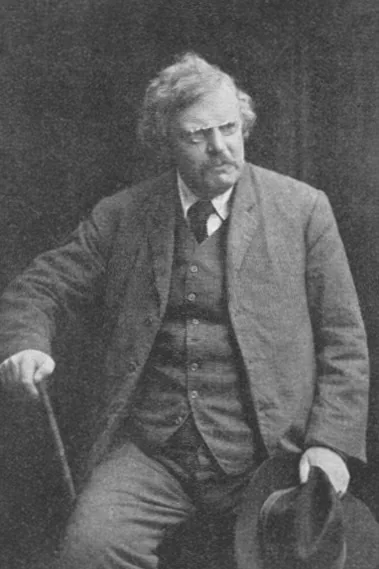
He was a striking figure on Fleet Street: well over six feet tall, eventually very stout, in a cape and a crushed wide-brimmed hat, with a swordstick and a habit of forgetting where he was supposed to be. A famous (and probably embroidered) story has him telegraphing his wife: “Am in Market Harborough. Where ought I to be?” His wife, Frances Blogg, whom he married in 1901, managed the practical side of his life with great patience. It was Frances, a devout Anglican, who did much to draw him back toward Christianity.
In 1909 the couple moved from London to Beaconsfield in Buckinghamshire, where they later built the house called Top Meadow. They had no children, to their lasting sorrow, but their home was always full of the children of friends and neighbours, for whom Chesterton performed with his toy theatre.
The books: where his reputation rests
Chesterton wrote in almost every form. A short map of the territory:
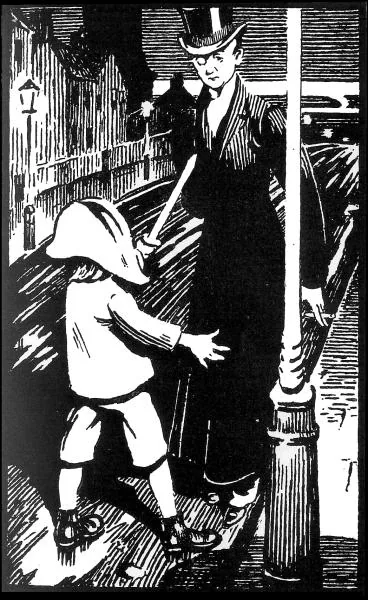
- Novels — The Napoleon of Notting Hill (1904), a comic fantasy about a London borough that goes to war for its own lamp-posts; The Man Who Was Thursday (1908), a “nightmare” thriller about anarchists and policemen that turns into a theological riddle; The Ball and the Cross (1909) and Manalive (1912).
- Detective stories — the Father Brown tales, collected in five volumes from The Innocence of Father Brown (1911) to The Scandal of Father Brown (1935).
- Apologetics — Heretics (1905), Orthodoxy (1908), The Everlasting Man (1925).
- Literary criticism and biography — Robert Browning (1903), Charles Dickens (1906), George Bernard Shaw (1909), The Victorian Age in Literature (1913), St. Francis of Assisi (1923), William Cobbett (1925), Chaucer (1932), St. Thomas Aquinas (1933).
- History and social thought — What’s Wrong with the World (1910), A Short History of England (1917), The Outline of Sanity (1926).
- Poetry — The Wild Knight (1900), The Ballad of the White Horse (1911), “Lepanto” (1911) and many comic and occasional verses.
If you want to know where to begin, we have written a separate twelve-month reading plan for newcomers.
Friends, foes, and friends who were foes
Chesterton’s most famous sparring partner was George Bernard Shaw. They disagreed about nearly everything — religion, property, vegetarianism, the meaning of progress — and debated in print and on public platforms for three decades. Their most celebrated public debate, “Do We Agree?”, took place in 1927 with Hilaire Belloc in the chair. Yet the two men were genuinely fond of each other. Shaw called Chesterton “a man of colossal genius”, and Chesterton wrote a whole book about Shaw that Shaw himself admired.
Chesterton argued just as cheerfully with H. G. Wells, with the agnostic Robert Blatchford, with Clarence Darrow and with dozens of lesser-known opponents. He believed that argument was a form of respect: you only argue with someone whose mind you take seriously. As he put it, people generally quarrel because they cannot argue.
His closest ally was Hilaire Belloc, the Anglo-French historian, poet and politician. The two were so often found in the same causes that Shaw invented a single pantomime beast to describe them: the “Chesterbelloc”. Together they developed the social philosophy known as distributism — the conviction that property, especially productive property such as land, workshops and small businesses, should be widely distributed among ordinary families rather than concentrated in the hands of either the state or a few great capitalists. From 1925 Chesterton edited G.K.’s Weekly to promote these ideas.
The road to Rome
Chesterton described Orthodoxy (1908) as a kind of “slovenly autobiography” — an account of how he had set out to invent a heresy of his own and discovered, to his embarrassment, that it was orthodoxy. At that time he was an Anglican, and he remained one for another fourteen years. On 30 July 1922 he was received into the Catholic Church in a makeshift chapel at the Railway Hotel in Beaconsfield by his friend Fr. John O’Connor, the Yorkshire priest who had inspired the character of Father Brown. Frances followed him into the Church four years later.
His conversion did not change his voice; it intensified it. The great Catholic books came afterwards: St. Francis of Assisi, The Everlasting Man — the book C. S. Lewis credited with helping him to see the Christian outline of history — The Catholic Church and Conversion (1926), The Thing (1929) and St. Thomas Aquinas.
The prince of paradox
Chesterton is often called the “prince of paradox”, and he used the device constantly — but not, as critics sometimes complained, merely to be clever. For Chesterton a paradox was “truth standing on its head to attract attention”. Familiar truths become invisible; turning them upside down makes us look at them again. “Angels can fly because they can take themselves lightly.” “The Christian ideal has not been tried and found wanting. It has been found difficult; and left untried.” “Tradition means giving votes to the most obscure of all classes, our ancestors.”
Behind the jokes stands a serious philosophy of gratitude. Chesterton believed that the deepest human response to reality is not analysis but astonishment — and that astonishment ought to lead to thanks. That is why a single paragraph of his can move from a joke about a lamp-post to a meditation on the Creation without seeming to change gear.
Death and legacy
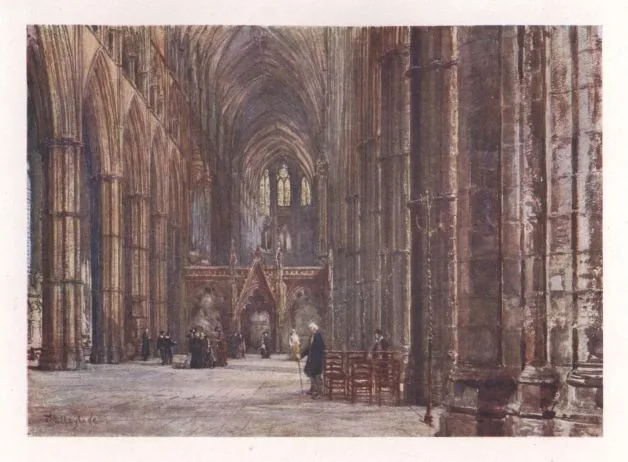
Chesterton died at Top Meadow on 14 June 1936, aged sixty-two. At his requiem in Westminster Cathedral a telegram from Pope Pius XI was read, calling him a “Defender of the Catholic Faith” — a pointed borrowing of the title the papacy had once given Henry VIII. He is buried in the Catholic cemetery in Beaconsfield.
His influence reached far beyond the Church. Dorothy L. Sayers, Agatha Christie and Jorge Luis Borges admired him; C. S. Lewis and Marshall McLuhan were changed by him; a column he wrote on Indian nationalism in 1909 is often said to have influenced the young Mohandas Gandhi. Today he is read by Catholics, Protestants and sceptics alike, studied in classical schools such as the growing network of Chesterton Academies, and celebrated by societies like our own on several continents.
Why read him now?
Because he is fun — which is not a small reason. But also because Chesterton saw clearly many of the questions that occupy us now: what happens to a society that forgets its ancestors, what technology and bureaucracy do to the family, why “progress” needs a destination, and how to disagree passionately without contempt. He was, as one of our speakers once put it, a man who argued with everyone and hated no one.
The world will never starve for want of wonders; but only for want of wonder.— G. K. Chesterton, Tremendous Trifles (1909)
If you would like to meet him in good company, come to one of our monthly meetings, or start with a talk from our recordings archive.